
Introduction
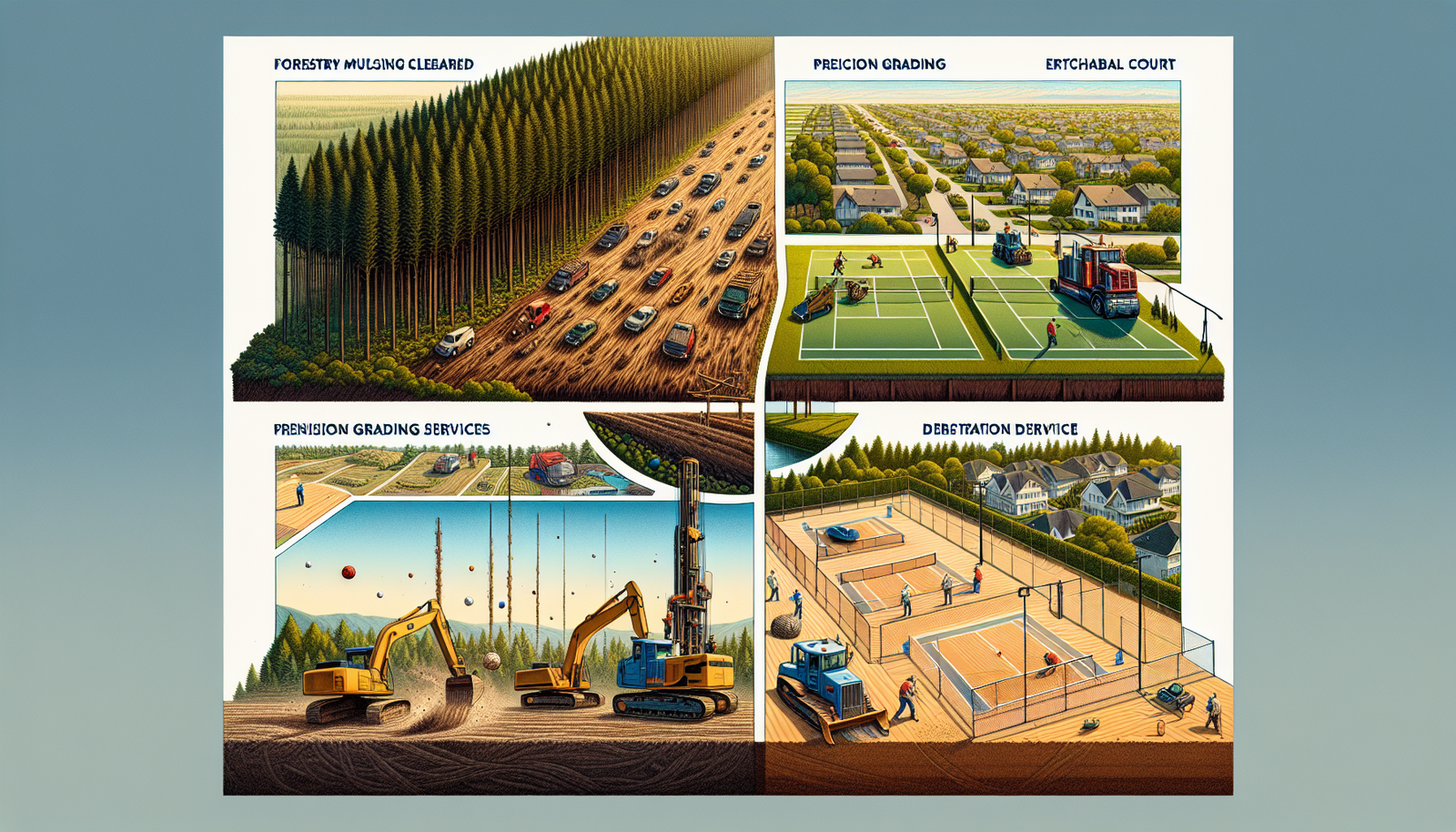
Earthworks services encompass a wide range of activities that involve altering or modifying the land's surface to suit various purposes. From land clearing and forestry mulching to precision grading and directional drilling, earthworks services play a critical role in preparing land for construction, landscaping, and recreational activities such as pickleball courts.
Land Clearing & Forestry Mulching Services
Land clearing and forestry mulching services are essential for removing trees, brush, and other vegetation to make way for new construction projects or landscaping initiatives. These services help create a clean and safe environment for further development while also promoting environmental sustainability by recycling the cleared materials into mulch.
Benefits of Land Clearing & Forestry Mulching Services
1. Improved site visibility and accessibility
2. Reduced risk of wildfires and pests
3. Efficient land preparation for construction or landscaping projects
Precision Grading Services
Precision grading services involve leveling and shaping the land surface to meet specific elevation and slope requirements. This process is crucial for ensuring proper drainage, stability, and functionality of the land for various purposes, including the construction of pickleball courts.
Key Aspects of Precision Grading Services
1. Accurate elevation control
2. Proper slope management
3. Enhanced surface smoothness and compaction
Pickleball Court Services
Creating pickleball courts requires meticulous planning and execution to meet the sport's standards and ensure player safety and enjoyment. From site preparation and layout marking to surface installation and finishing touches, pickleball court services cover a wide range of earthworks activities.
Essential Steps in Pickleball Court Services
1. Site evaluation and selection
2. Earthwork preparation and grading
3. Court surfacing and line marking
Directional Drilling Services
Directional drilling services offer a trenchless method for installing underground utility lines, such as water, gas, and electric conduits, without disturbing the land surface. This technology is valuable for minimizing disruption to existing landscapes and infrastructures while ensuring efficient and reliable utility installations.